AI is the "new" Reality
Is AI really the new reality
Artificial Intelligence is really making a big splash in the way we look at photography. AI is whipping up photos that look as real as can be, even if they never actually happened, which is getting pretty confusing when trying to figure out the difference between what's real or not. In this blog I'm going to take a closer look at how AI is changing photojournalism, the headaches it can bring, and what it all might mean for the future of photojournalism.
 Photo by: David Carson
In Seeing is no longer believing: Atifical Intelligence impact on photojournalism by David Carson, on During the 2024 election had a major impact on how individuals see photojournalism, for example Kamala Harris’s crowd, was accused of being AI generated. The article states, that while AI imagery may not have significantly impacted voters, it displayed authentic visuals, thats shows the audience that similar information that could have been found by a already taken photo and influence their decision making as well as what their view points on the candidates might be.
Photo by: David Carson
In Seeing is no longer believing: Atifical Intelligence impact on photojournalism by David Carson, on During the 2024 election had a major impact on how individuals see photojournalism, for example Kamala Harris’s crowd, was accused of being AI generated. The article states, that while AI imagery may not have significantly impacted voters, it displayed authentic visuals, thats shows the audience that similar information that could have been found by a already taken photo and influence their decision making as well as what their view points on the candidates might be.
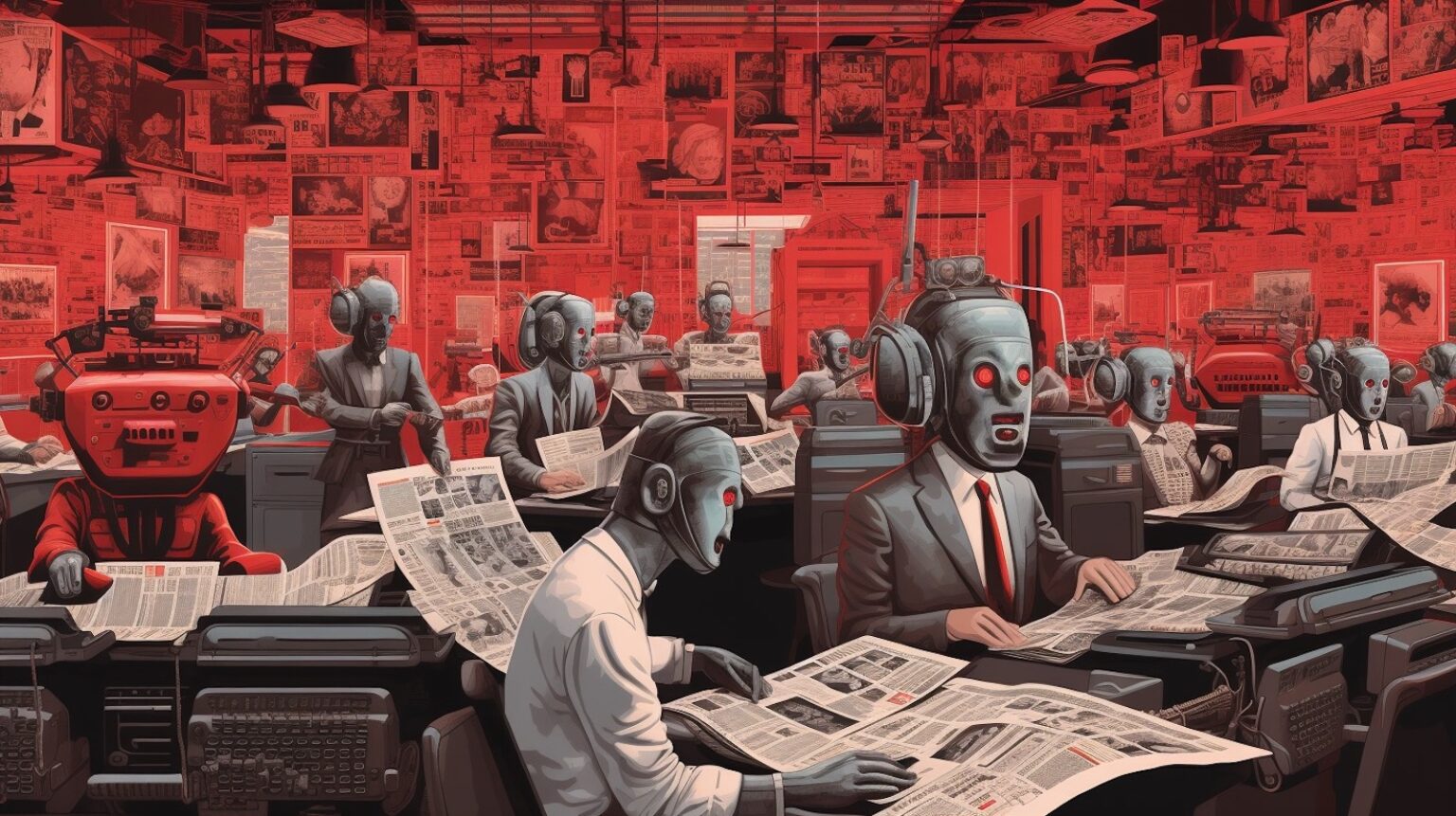 Photo By Hannes Cools and Nicholas Diakopoulos
One of the biggest ways AI is changing things is by making images that look real. Like a photo of a protest shows real people and real stuff that is happening, but AI can copy that and make something that looks the same but isn’t really real. Its hard to tell the difference sometimes, and that makes photojournalists job harder because people might believe the AI version.
The Ted Talk talks about how news organizations are figuring out rules for using AI in their work. It says that humans still need to check AI stuff so it’s accurate and ethical. For example, different news outlets, Aftonbladet and VG specifficaly, make sure all AI content is looked over by a person before it goes out. Reuters also says humans need to be involved to treat people fairly. The article also talks about being honest with readers, like The Guardian and CBC tell people when AI helped make content. Some newsrooms are careful and only use AI to help, not to make all the stories. Overall, it says news organizations should make clear rules for using AI so it doesn’t mess with journalism.
Photo By Hannes Cools and Nicholas Diakopoulos
One of the biggest ways AI is changing things is by making images that look real. Like a photo of a protest shows real people and real stuff that is happening, but AI can copy that and make something that looks the same but isn’t really real. Its hard to tell the difference sometimes, and that makes photojournalists job harder because people might believe the AI version.
The Ted Talk talks about how news organizations are figuring out rules for using AI in their work. It says that humans still need to check AI stuff so it’s accurate and ethical. For example, different news outlets, Aftonbladet and VG specifficaly, make sure all AI content is looked over by a person before it goes out. Reuters also says humans need to be involved to treat people fairly. The article also talks about being honest with readers, like The Guardian and CBC tell people when AI helped make content. Some newsrooms are careful and only use AI to help, not to make all the stories. Overall, it says news organizations should make clear rules for using AI so it doesn’t mess with journalism.
 Is AI the new Reality by Kayla Peterkin
,is a slideshow that you will see real protest images and AI generated versions side by side. You will be able to explore how AI is reshaping photojournalism and also raising questions about truth, ethics, and the future of news.
Is AI the new Reality by Kayla Peterkin
,is a slideshow that you will see real protest images and AI generated versions side by side. You will be able to explore how AI is reshaping photojournalism and also raising questions about truth, ethics, and the future of news.
 AI is changing photography in news a lot. It can be really cool and help tell stories, but it also can make people confused about what’s real. Both journalists and people reading the news need to know about AI and be careful about what they believe. Its really important to think about the truth when using AI images.
In the article, How Journalism Can Survive AI By EJ Haas, it describes how AI is now threatening to replace journalists by being able to produce items fast, and most importantly low cost content. Haas argues that AI can assist with tasks like writting, it does lacks creativity, emotion, and human judgment. Journalists should understand that personal storytelling and using their human view and voice, as seen in the article, AI cannot replicate this blessing of humanity.
In The Harsh Reality: What AI Means For The Future Of Photograhpy by Anothny Toglife, his explains his feelings about AI and what he feels like the generation of photographers will go through with such advance AI equipment coming out. He shares his feeling very openly with out much holding back.
AI is changing photography in news a lot. It can be really cool and help tell stories, but it also can make people confused about what’s real. Both journalists and people reading the news need to know about AI and be careful about what they believe. Its really important to think about the truth when using AI images.
In the article, How Journalism Can Survive AI By EJ Haas, it describes how AI is now threatening to replace journalists by being able to produce items fast, and most importantly low cost content. Haas argues that AI can assist with tasks like writting, it does lacks creativity, emotion, and human judgment. Journalists should understand that personal storytelling and using their human view and voice, as seen in the article, AI cannot replicate this blessing of humanity.
In The Harsh Reality: What AI Means For The Future Of Photograhpy by Anothny Toglife, his explains his feelings about AI and what he feels like the generation of photographers will go through with such advance AI equipment coming out. He shares his feeling very openly with out much holding back.


Comments
Post a Comment