Pre-Digital Photographic Technology
The Evolution of Black and White Roll Film in Photojournalism
 Photo Caption:
Who/what is pictured: Boo the Cat by Kayla Peterkin
What is going on: Peeking out from under the curtain
When: September 26, 2025
Where: Chicopee, Massachusetts
Why: To capture a moment of curiosity and playfulness, reflecting attention to framing and narrative similar to photojournalistic principles
Photo Caption:
Who/what is pictured: Boo the Cat by Kayla Peterkin
What is going on: Peeking out from under the curtain
When: September 26, 2025
Where: Chicopee, Massachusetts
Why: To capture a moment of curiosity and playfulness, reflecting attention to framing and narrative similar to photojournalistic principles
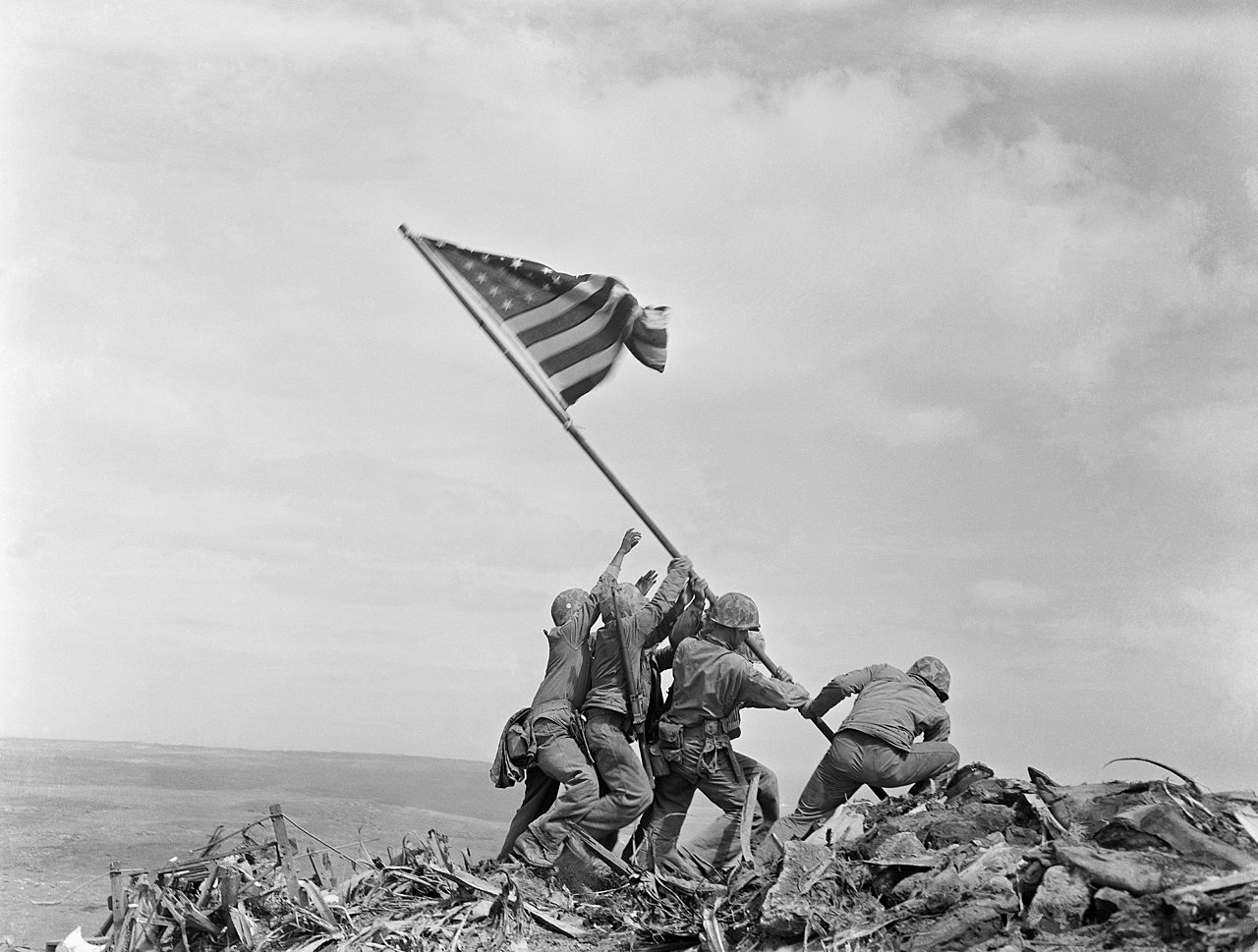 Who or What: Raising the Flag on Iwo Jima by Joe Rosenthal
What is Going On: Fighting during combat
When: June 18, 1965
Where:Phuoc Vinh Airstrip, South Vietnam
Why: The photo was taken to document the experiences of soldiers during the Vietnam War and to spark the patriotism in the American people.
Black and white roll film, introduced in the late 19th and early 20th centuries, changed photography by making it more portable and efficient. Unlike earlier glass plate negatives, roll film allowed multiple exposures on a single roll, allowing the photographers to capture more images without the need to reload between shots. This advantage was significant for photojournalists who need to taking quick shots in holstile enviroments.
The impact of black and white roll film on photojournalism was overpowering. It allowed photojournalists to move with ease through scenes, capturing dangerous or fleeting moments more effectively. The portability of roll film cameras, such as the Leica 35mm, allowed photographers to be more agile and responsive in the field. This technological shift also led to an empowering change in photography, as more individuals gained access to tools that could produce high-quality images, broadening the scope and range of photojournalistic work (Rosie Torres, “The History of Black and White Photography,” Petapixel, August 26, 2021)
On the other hand, today’s digital photography offers instant image, with large editing capabilities, and the convenience of digital storage. When I took my photograph of my cat peeking from under the curtain, I was able to immediately adjust focus, lighting, and composition to capture the exact moment of curiosity and playfulness. Unlike black and white roll film, where photographers had to carefully prepare for each shot and wait for development, digital photography allows for immediate results, reflecting the evolution of photojournalistic technology described in Weegee Tells How by Rortydog.
The photograph of my cat serves as a reflection of themes discussed in Life Magazine about photojournalist Margaret Bourke-White, particularly the responsibility of the photographer to consider framing, context, and narrative. While this image is personal rather than news-focused, it demonstrates similar principles: capturing a moment that invites the viewer to interpret the subject’s behavior and story. The play of shadows, the partial cover of the cat, and the curiosity captured in the photo parallel the thoughtfulness photojournalists must use when documenting people or events, echoing Bourke-White’s careful attention to composition and subject engagement during assignments such as photographing Gandhi and the Ohio River flood victims (S. Za, “Tag: Margaret Bourke-White,” Iconic Enough?, April 11, 2014).
Using digital technology allowed me to explore many angles and ideas, something that black and white roll film would have made more challenging due to limited exposures (Torres, “The History of Black and White Photography,” 2021). The immediate feedback also helped me better understand the lighting, texture, and mood of the image, which would have required trial and error with chemical development in roll film photography (Torres, 2021). This highlights how technological advancements have enhanced both creativity and efficiency, while ethical considerations and narrative responsibility remain the sole focus of the photograph (The New York Times, “What Is Photojournalism and Why Is It Important?”). Even in digital photography, principles discussed by Margaret Bourke-White—such as careful framing, context, and narrative—remain critical, reinforcing that the photographer’s responsibility to the subject and viewer is timeless (S.Za., “Margaret Bourke-White,” 2014).
In conclusion, the evolution from black and white roll film to digital photography has transformed the practice of capturing moments (Torres, “The History of Black and White Photography,” 2021). While the technology has advanced, allowing for instant review, adjustment, and sharing, the fundamental principles of framing, narrative, and ethical consideration continue to connect photographers across eras (The New York Times, “What Is Photojournalism and Why Is It Important?”). Even a simple, personal image like my cat peeking from under the curtain reflects the continuity of these principles, showing how photography—past and present—invites reflection, interpretation, and engagement with the subject. Digital photography also allows us to experience and share moments in real time, creating a new form of nostalgia that connects people immediately across distances (Lavoie, “Modern Photography Is Changing How We Remember Our Lives,” 2018). This demonstrates that while cameras and media have evolved, the core purpose of photography—to observe, preserve, and communicate human experience—remains unchanged.
Who or What: Raising the Flag on Iwo Jima by Joe Rosenthal
What is Going On: Fighting during combat
When: June 18, 1965
Where:Phuoc Vinh Airstrip, South Vietnam
Why: The photo was taken to document the experiences of soldiers during the Vietnam War and to spark the patriotism in the American people.
Black and white roll film, introduced in the late 19th and early 20th centuries, changed photography by making it more portable and efficient. Unlike earlier glass plate negatives, roll film allowed multiple exposures on a single roll, allowing the photographers to capture more images without the need to reload between shots. This advantage was significant for photojournalists who need to taking quick shots in holstile enviroments.
The impact of black and white roll film on photojournalism was overpowering. It allowed photojournalists to move with ease through scenes, capturing dangerous or fleeting moments more effectively. The portability of roll film cameras, such as the Leica 35mm, allowed photographers to be more agile and responsive in the field. This technological shift also led to an empowering change in photography, as more individuals gained access to tools that could produce high-quality images, broadening the scope and range of photojournalistic work (Rosie Torres, “The History of Black and White Photography,” Petapixel, August 26, 2021)
On the other hand, today’s digital photography offers instant image, with large editing capabilities, and the convenience of digital storage. When I took my photograph of my cat peeking from under the curtain, I was able to immediately adjust focus, lighting, and composition to capture the exact moment of curiosity and playfulness. Unlike black and white roll film, where photographers had to carefully prepare for each shot and wait for development, digital photography allows for immediate results, reflecting the evolution of photojournalistic technology described in Weegee Tells How by Rortydog.
The photograph of my cat serves as a reflection of themes discussed in Life Magazine about photojournalist Margaret Bourke-White, particularly the responsibility of the photographer to consider framing, context, and narrative. While this image is personal rather than news-focused, it demonstrates similar principles: capturing a moment that invites the viewer to interpret the subject’s behavior and story. The play of shadows, the partial cover of the cat, and the curiosity captured in the photo parallel the thoughtfulness photojournalists must use when documenting people or events, echoing Bourke-White’s careful attention to composition and subject engagement during assignments such as photographing Gandhi and the Ohio River flood victims (S. Za, “Tag: Margaret Bourke-White,” Iconic Enough?, April 11, 2014).
Using digital technology allowed me to explore many angles and ideas, something that black and white roll film would have made more challenging due to limited exposures (Torres, “The History of Black and White Photography,” 2021). The immediate feedback also helped me better understand the lighting, texture, and mood of the image, which would have required trial and error with chemical development in roll film photography (Torres, 2021). This highlights how technological advancements have enhanced both creativity and efficiency, while ethical considerations and narrative responsibility remain the sole focus of the photograph (The New York Times, “What Is Photojournalism and Why Is It Important?”). Even in digital photography, principles discussed by Margaret Bourke-White—such as careful framing, context, and narrative—remain critical, reinforcing that the photographer’s responsibility to the subject and viewer is timeless (S.Za., “Margaret Bourke-White,” 2014).
In conclusion, the evolution from black and white roll film to digital photography has transformed the practice of capturing moments (Torres, “The History of Black and White Photography,” 2021). While the technology has advanced, allowing for instant review, adjustment, and sharing, the fundamental principles of framing, narrative, and ethical consideration continue to connect photographers across eras (The New York Times, “What Is Photojournalism and Why Is It Important?”). Even a simple, personal image like my cat peeking from under the curtain reflects the continuity of these principles, showing how photography—past and present—invites reflection, interpretation, and engagement with the subject. Digital photography also allows us to experience and share moments in real time, creating a new form of nostalgia that connects people immediately across distances (Lavoie, “Modern Photography Is Changing How We Remember Our Lives,” 2018). This demonstrates that while cameras and media have evolved, the core purpose of photography—to observe, preserve, and communicate human experience—remains unchanged.


Comments
Post a Comment