Photojournalism and Bias
 “Going Home” — Photo by Ed Clark
When I look at Ed Clark’s Going Home, I feel the weight of the national grief hit me, but also I see how my own background shapes what and I think. The meaning of this image is that grief can be so personaly deep, while it can also represent a moment that is emotional across a whole nation. How are images are constructed realities, and that photographers always make choices about composition and framing. This image reminds me that my view is shaped by my own experiences with loss, culture, and perspective.
Assessment Principles
Emotion: The sorrow on the accordion player’s face becomes the main message and immediately communicates the emotions going on in this moment.
Framing: Clark’s chose to make this man the main focus of this focus, causeing the meaing behind the photo to deepen
Lighting: Natural light highlights his expression, drawing all attention to the subject’s face and emphasizing the emotional impact.

I considered how photos can dismay the government's narrative. During the Vietnam era, the officials tried to present student protestors as dangerous, but this image shows this claim is bias, by showing them as victims. This is a contrast that I turns my view towards this photo as truthful.
Ways of Knowing
I used empirical observation (seeing the unedited moment), and authority (credible archives affirming the image’s authenticity).
Assessment Principles
Rule of Thirds: The placement of Vecchio creates natural tension and directs the viewer’s emotional response.
Depth: The surrounding students and campus environment ground the image in a real, identifiable place.
Contrast: The contrast between stillness (the body) and movement (Vecchio’s scream) reinforces the emotional truth.
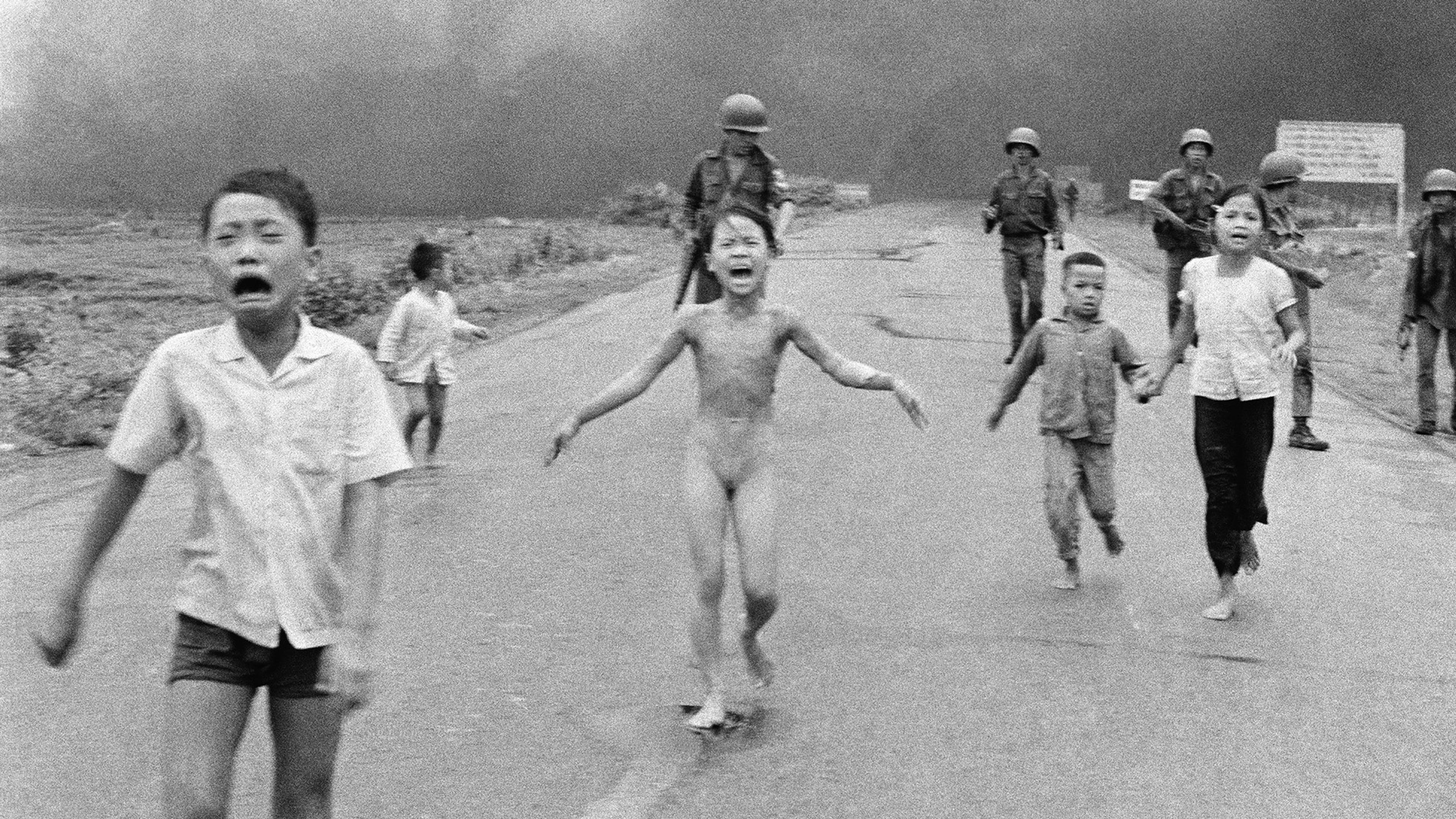
My second image is not truth because I think the controversy surrounding authorship and the ethical debates about publishing a naked child complicate its meaning. While the suffering is real, Module 11’s concept of contextual manipulation matters here—audiences rarely know the full situation behind a photograph. Additionally, recent disputes over whether Nick Ut is the true photographer raise questions about accuracy and authorship, which weakens the image’s claim to truth.
Another Module 11 concept that applies is Yellow Journalism. This style exaggerates or sensationalizes tragedy to provoke emotion. Even though this photo wasn’t faked, the global shock value for this context is making the image vulnerable to the yellow journalistic interpretation.
Ways of Knowing
I used reasoning and testimony.
Assessment Principles
Center of Interest: Kim Phúc is placed in the center, drawing emotional focus but this emotional intensity can alsp overshadow the factual nuance.
Balance: The chaotic background of the fleeing soldiers creates so much tension, contributing to an overwhelming sense of saddeness and despair.
Timing: The split second moment captures the height of tragedy, but timing alone doesn’t guarantee truth if context is missing.


Comments
Post a Comment